
Northern Water Smart Program
Our Northern Water Smart Programs aim to reduce drowning in Manitoba’s remote and northern communities.
For more information, please contact the Water Smart Manager.
History
Lifesaving Society Manitoba has long recognized that drowning rates in Northern Manitoba are disproportionally high compared to other parts of the province. To combat this problem, the Society launched the Northern Water Smart® Program in 2005. Since the Lifesaving Society uses targeted approaches to combat drowning and water-related injuries, the program was developed specifically to meet the needs of northern and remote communities. The initiative is aimed at reducing drownings and water-related injuries and promoting Water Smart® behavior in these communities.
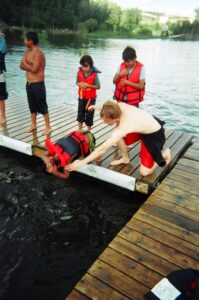
In 2005, a single instructor visited 6 communities. Soon, Lifesaving Society Manitoba utilized more than five instructors per summer. In its first five years, the program reached 45 communities and approximately 5000 people participated. The program has received support from both provincial and federal levels of government. In 2008 the Northern Water Smart® program received an Injury Prevention Award from the province of Manitoba. In 2012, the program received the President’s Award for Outstanding Achievement from Recreation Connections Manitoba as well as an award from the Manitoba Minister of Aboriginal and Northern Affairs.
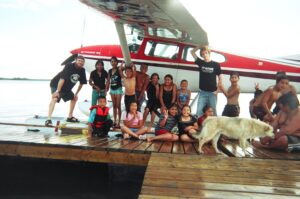
Demand for the program is growing every year, and Lifesaving Society Manitoba is committed to the continuation and sustainability of the program.
Program Goals
The primary goal of the Northern Water Smart® Program is to reduce drowning and water-related injuries in Northern Manitoba. Lifesaving Society Manitoba is achieving this goal directly by teaching basic swimming survival skills, providing training in safe boating practices and teaching first aid courses. Indirectly, these programs are helping to raise awareness about the issue of water safety. The long-term goal of the program is to help northern and remote communities become Water Smart®.
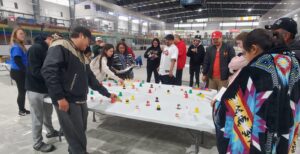
Lifesaving Society Manitoba is committed to the continuation of this program. We believe that for the program to be sustainable, residents of northern communities need to be trained as swimming, first aid, and B.O.A.T. instructors. In this way, water safety education can come from within the community. The Lifesaving Society is providing support to communities that wish to train Instructors, become affiliates and conduct their own courses.
Summer Program Components
Lifesaving Society Manitoba’s Northern Water Smart Program aims to make your community Water Smart this July and August!
There is no charge to the participants in any of the courses, but your community must provide clean, safe, and secure accommodations for our instructor(s) during their week-long stay and pay a community access fee to cover the cost of meals. We send one or two instructors, depending on the size of your community.
Course options we are able to provide are listed below:
 Swim to Survive Lessons: For anyone age 6 and older; we run 4 days of 3 hour survival swimming lessons (weather dependent). Certificates are mailed out for all The three skills they learn to prevent drowning are:
 Swim to Survive Lessons: For anyone age 6 and older; we run 4 days of 3 hour survival swimming lessons (weather dependent). Certificates are mailed out for all The three skills they learn to prevent drowning are:
-
- Safe entries for falling into the water (don’t panic),
- How to tread water for one minute (locate safety),
- How to swim for 50 metres (getting to safety).
- Water Smart Safety Clinics – 2-7 hour courses: These sessions provide your community with safety information on specific water-related topics. They will include presentations and hands on activities to reinforce the lessons in each course. You can choose one or more of the following topics depending on your community needs:
 Water Smart Safety Clinics – 2-7 hour courses: These sessions provide your community with safety information on specific water-related topics. They will include presentations and hands on activities to reinforce the lessons in each course. You can choose one or more of the following topics depending on your community needs:
-
- Boat Operator Accredited Training (B.O.A.T.) – This 7 hour course allows successful candidates to earn their Transport Canada Pleasure Craft Operator (PCO) Card. Candidates must attend the entire course and pass a written multiple-choice test in order to be successful.
- Water Smart for Kids – This 2 hour dryland program is designed for children ages 6 – 12 and provides them with basic water safety and first aid training.
- Within Arms’ Reach – This 2 hour dryland program is for parents and caregivers of young children. It covers the supervision of young children in, on, or around water.
 Water Smart for Kids – This 2 hour dryland program is designed for children ages 6 – 12 and provides them with basic water safety and first aid training.
- Emergency First Aid & CPR Level C – 8-hour course: Manitoba Workplace Health and Safety recognizes this course as Basic First Aid. Each candidate will learn basic rescue skills for general emergencies such as bleeding, breathing emergencies, burns, choking, heart attack, stroke and CPR and AED usage for adults, children and infants.
Winter Program Components
The Northern Winter Smart Program can visit your community to deliver cold weather, hypothermia, and water safety education. As drowning can occur year-round, these training programs are designed to reduce injury and cold weather tragedies. The program can also include the Emergency First Aid course.
Program Descriptions
For a Winter Smart program visit your community may select from among the following programs that we offer. Addtionally, we would like to reach as many people as possible with safety education – please be sure to choose programs that serve your entire community.
- Winter Smart Safety Clinics – 20 minute to 2 hour presentations: These sessions are designed for children and adults. The presentations include information on high risk groups, safe snowmobiling practices, trip planning, safety equipment, ice safety, rescue techniques, and winter first aid. You can choose one or more of the following depending on your community needs:
 Winter Smart Safety Clinics – 20 minute to 2 hour presentations: These sessions are designed for children and adults. The presentations include information on high risk groups, safe snowmobiling practices, trip planning, safety equipment, ice safety, rescue techniques, and winter first aid. You can choose one or more of the following depending on your community needs:
-
- Public Winter Smart Presentation – 2 hour
- School Winter Smart Presentation – 20 to 60 minutes (depending on age group)
- Within Arms’ Reach – 2 hour presentation: This program is designed for parents and caregivers of young children or anyone interested in learning about being safe around the water. The presentation includes information on risk factors for drowning, high risk groups, adult to child supervision ratios, trip planning, safety equipment, basic rescue techniques and general first aid.
- Boat Operator Accredited Training (B.O.A.T.) – 7 hour course: This 7 hour course allows successful candidates to earn their Transport Canada Pleasure Craft Operator (PCO) Card. Ideal for youth just starting out with boating, with a recommended age of 12+. Candidates must attend the entire course and pass a written multiple-choice test in order to be successful.
- Emergency First Aid & CPR Level C – 8 hour course: Manitoba Workplace Safety and Health recognizes this course as Basic First Aid. Each candidate will learn basic rescue skills for general emergencies such as bleeding, breathing emergencies, burns, choking, heart attack, stroke, and CPR and AED usage for adults, children and infants.
 Within Arms’ Reach – 2 hour presentation: This program is designed for parents and caregivers of young children or anyone interested in learning about being safe around the water. The presentation includes information on risk factors for drowning, high risk groups, adult to child supervision ratios, trip planning, safety equipment, basic rescue techniques and general first aid.
 Emergency First Aid & CPR Level C – 8 hour course: Manitoba Workplace Safety and Health recognizes this course as Basic First Aid. Each candidate will learn basic rescue skills for general emergencies such as bleeding, breathing emergencies, burns, choking, heart attack, stroke, and CPR and AED usage for adults, children and infants.
Visit our online store LifeguardShop.ca for all your course books, badges and stickers needs. Your purchases help support Lifesaving Society Manitoba!